
Offline Home Automation: Why the Homematic IP Home Control Unit (HmIP-HCU1) Works When Your Internet Doesn't
Discover how the Homematic IP Home Control Unit (HmIP-HCU1) keeps your smart home running offline. Learn about local control, data privacy, and why German engineering makes this central hub essential for reliable home automation in 2026.
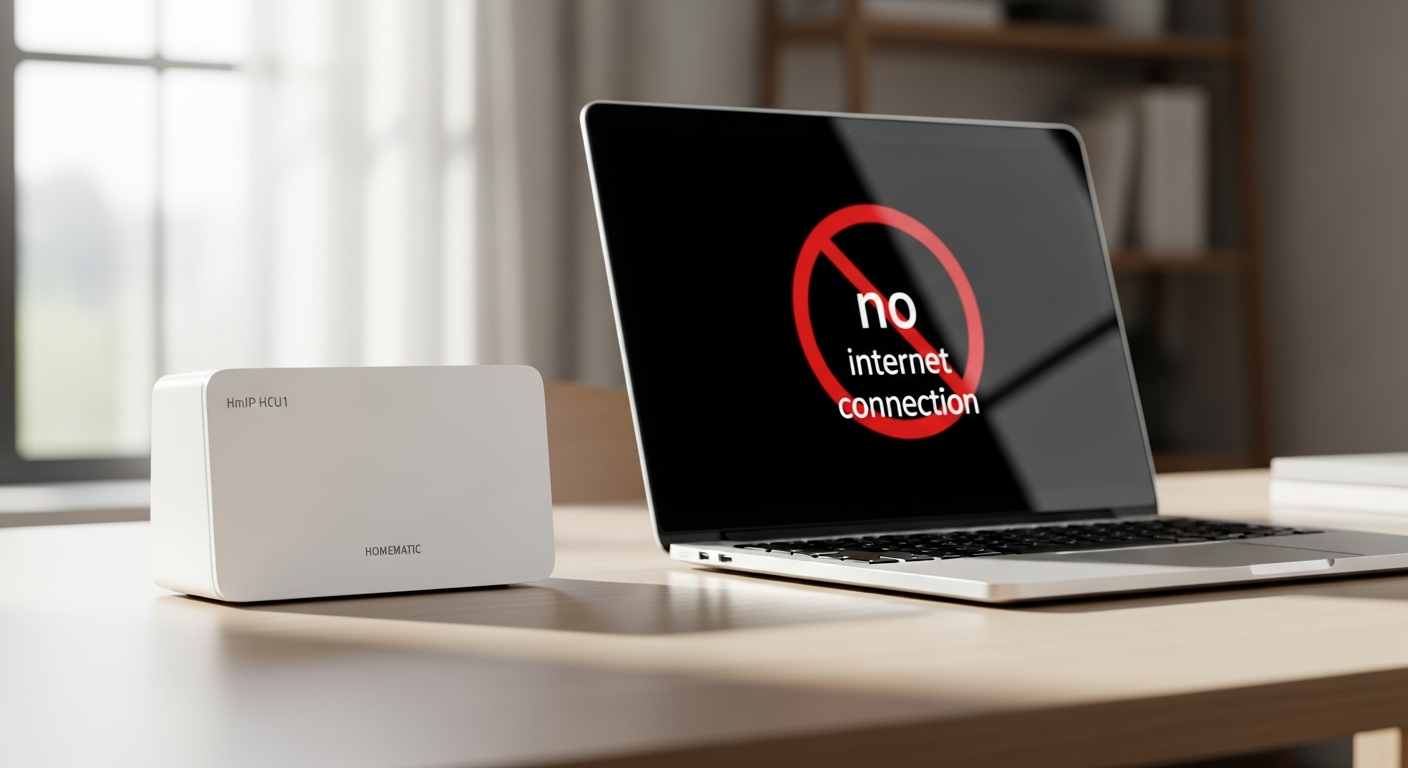
Your heating system stops responding. Your security sensors go silent. Your lights won't turn on. For most smart home users, a lost internet connection means losing control of their entire home—but it doesn't have to be this way.
The Homematic IP Home Control Unit (HmIP-HCU1) operates independently from internet connectivity, making it a game-changer for homeowners who refuse to let their automation depend on their broadband provider's reliability. Built by ELV Elektronik, a respected German electronics manufacturer, this dedicated hardware unit manages local operations with complete autonomy. Unlike cloud-dependent smart home hubs that require constant online connectivity, the HmIP-HCU1 serves as the central nervous system of the Homematic IP ecosystem.
Discover how the Homematic IP Home Control Unit can transform your home automation experience.
Whether you're upgrading an existing smart home or building one from scratch, understanding how this control unit delivers offline functionality reveals why thousands of European homeowners have chosen it as their automation foundation. This analysis examines how the HmIP-HCU1 maintains control during internet outages, explores its offline capabilities across heating, lighting, and security systems, breaks down the technical advantages of local data storage, and helps you determine whether this mid-range controller fits your specific automation needs.
The Offline-First Architecture That Sets the HmIP-HCU1 Apart
How local processing eliminates cloud dependency for core smart home functions
The fundamental distinction between the HmIP-HCU1 and cloud-dependent alternatives lies in where automation decisions are made. Cloud-based systems transmit commands to remote servers, wait for responses, and rely entirely on internet connectivity to execute even the simplest actions. The HmIP-HCU1 processes these commands locally, on hardware sitting in your home. When you adjust your thermostat or turn on lights, the decision-making happens immediately, without any external dependency.
The difference between cloud-based hubs and locally-operated control units
Cloud hubs offer convenience and remote access from anywhere globally, but they require perpetual internet connectivity and trust external companies to handle your home data. Locally-operated control units like the HmIP-HCU1 prioritize resilience. They maintain their core functionality regardless of your internet status. Your home automation doesn't pause when your broadband connection drops; it continues executing the routines and automations you've programmed.
Why offline capability matters for security, heating, and emergency scenarios
Heating represents perhaps the most critical function of any smart home system. During winter, a loss of automation control could mean an unheated house—not merely uncomfortable, but potentially dangerous. Security functions depend equally on reliability. Motion sensors detecting intrusions, door contact sensors monitoring entry points, and alarm triggers must operate regardless of connectivity status. Emergency scenarios demand that your home responds to your commands instantly, without negotiating with cloud infrastructure.
The role of the HmIP-HCU1 as a standalone gateway versus cloud-reliant alternatives
The HmIP-HCU1 functions as a complete standalone gateway. It doesn't require cloud validation or internet-based middleware to operate. When configured with Homematic IP devices, it becomes a self-contained ecosystem capable of executing complex automation routines entirely within your home network. This design philosophy extends the unit's reliability beyond simple redundancy—it transforms offline capability from an emergency fallback into the primary operational mode.
How local routing protocols extend wireless device range without internet
Wireless smart home devices typically communicate over limited distances. The HmIP-HCU1 implements advanced routing protocols that allow devices to relay signals through each other, effectively extending network coverage throughout your entire home. This mesh-networking approach improves with each additional device added to the system, creating a self-strengthening network that doesn't depend on internet infrastructure.
Data residency benefits: keeping your home automation data on your own hardware
Every automation routine, every sensor reading, every configuration setting remains stored on the HmIP-HCU1's local storage. Your home automation data never travels to external servers, never gets processed by third-party algorithms, and never contributes to corporate data aggregation. You maintain complete possession of information describing how your home operates, who enters it, and when various systems activate.
Real-world scenarios where offline operation prevents smart home failures
Consider a winter morning when your internet provider experiences an outage. With a cloud-dependent system, your heating automation stops working entirely—you return to manual temperature control. With the HmIP-HCU1, your heating continues following its programmed schedule, maintaining your home's temperature automatically. A similar scenario applies to security: motion sensors continue detecting movement, door sensors continue monitoring entry points, and automation rules continue triggering your configured responses.
Core Functions That Work Without Internet Connection
Heating and thermostat automation: maintaining temperature control during outages
The HmIP-HCU1 maintains complete control over Homematic IP heating thermostats even when internet connectivity disappears. Weekly schedules continue executing, temperature setpoints remain adjustable via the local control unit, and weather-compensated heating routines persist in their programmed configurations. Energy efficiency optimizations don't pause—they continue operating autonomously, reducing unnecessary heating and managing your home's climate as designed.
Lighting control: switching scenes and automation routines locally
Lighting automation connected to the HmIP-HCU1 responds to local triggers—motion sensors, scheduled routines, or manual commands—without requiring any internet connectivity. Time-based scenes activate as programmed. Motion detection triggers illuminate hallways and entryways. Presence-based routines continue creating the illusion of occupancy by controlling lighting patterns. All these functions execute entirely through local processing.
Security operations: motion sensors, door contacts, and alarm functions running independently
Security-focused Homematic IP components operate with full autonomy once connected to the HmIP-HCU1. Motion sensors detect intrusions. Door and window contact sensors monitor entry points. Alarm triggers execute configured responses—sounding sirens, activating lights, or logging events—completely independent of internet availability. This autonomous operation transforms your security system from a connectivity-dependent feature into a hardened, always-operational function.
Roller shutter and window blind automation: mechanical control without connectivity
Automated window coverings connected to Homematic IP actuators respond to local commands, schedules, and sensor-triggered events without internet dependency. Morning routines open blinds automatically. Evening schedules close them. Heating optimization adjusts solar gain by managing window coverings based on temperature sensors and programmed logic—all locally processed and locally executed.
Device linkage and automation rules: triggering actions between Homematic IP components
The HmIP-HCU1 evaluates complex conditional logic entirely on its local hardware. When a motion sensor detects movement AND a light sensor confirms darkness AND a schedule indicates evening hours, specific lighting scenes activate automatically. These multi-condition automation rules execute with the responsiveness of local processing, creating seamless home automation experiences that cloud-dependent systems often struggle to match.
Energy monitoring: tracking consumption data stored locally
Connected energy meters report consumption data to the HmIP-HCU1, which stores and processes this information locally. Your home's energy usage patterns, device-specific consumption metrics, and historical trend analysis remain accessible through the local interface without requiring cloud synchronization or external data transmission.
Which advanced features remain available offline versus online-only capabilities
Most core automation functions operate offline without limitation. Remote access through the Homematic IP app from outside your home requires internet connectivity, as does cloud-based data backup and cross-system integrations with non-Homematic IP platforms. However, the essential functions—heating control, security monitoring, lighting automation, and scene execution—all operate fully offline.
Explore the complete range of Homematic IP components available through ELV Elektronik.
The Homematic IP Ecosystem: Compatibility and Expansion Potential
Supported wired and wireless Homematic IP components (thermostats, sensors, switches)
The HmIP-HCU1 integrates with an extensive array of Homematic IP devices spanning heating thermostats, wall-mounted temperature sensors, motion detectors, door and window contact sensors, wireless light switches, roller shutter actuators, and relay modules for various control applications. Each component communicates using the Homematic IP protocol, ensuring seamless integration and synchronized operation across your entire installation.
Integration with heating systems, lighting fixtures, and access control devices
Homematic IP compatible heating systems connect directly to the HmIP-HCU1 for centralized temperature management. Lighting control relies on wireless switch actuators and dimmer modules that respond to both manual switches and automated triggers. Access control devices including smart locks and entry monitoring sensors integrate into the same unified automation framework.
Wireless range extension through advanced routing capabilities
Each Homematic IP device functions as both a signal receiver and a relay point, creating a mesh network that extends coverage throughout your home. Adding more devices systematically improves network reliability and range, allowing communication in areas that would otherwise experience poor signal strength. This self-healing network adapts automatically to changing conditions and device availability.
Compatibility limitations: what the HmIP-HCU1 cannot connect to without bridges
The HmIP-HCU1 operates exclusively within the Homematic IP ecosystem. Devices from other manufacturers—Philips Hue lighting, Nest thermostats, or non-Homematic IP motion sensors—require additional bridge hardware or integration middleware to communicate with the control unit. This ecosystem lock-in represents a significant consideration for users with existing smart home infrastructure from competing manufacturers.
Expansion pathways: growing your system from basic climate control to comprehensive automation
A minimal implementation might consist of the HmIP-HCU1 and a single heating thermostat, addressing fundamental climate control needs. Progressive expansion adds motion sensors for security, door contacts for access monitoring, lighting switches for automated illumination, and roller shutter actuators for solar management. Sophisticated installations incorporate dozens of interconnected devices creating complex automation routines coordinating multiple systems simultaneously.
Ecosystem lock-in considerations: balancing specialized features with platform flexibility
Committing to Homematic IP means accepting that system expansion occurs within this single manufacturer's ecosystem. This constraint provides significant benefits—guaranteed compatibility, unified control interface, and comprehensive feature integration—but it eliminates the flexibility to cherry-pick components from different manufacturers based on individual product strengths. Users must evaluate whether these constraints align with their long-term smart home vision.
Future-proofing your smart home with a dedicated Homematic IP infrastructure
ELV Elektronik's continued investment in the Homematic IP platform, ongoing firmware updates, and expanding device offerings suggest sustained ecosystem development. Building on this foundation positions your installation for growth and capability improvements without requiring wholesale replacement of existing infrastructure.
Local Data Storage and Privacy Advantages
How the HmIP-HCU1 stores automation data, logs, and device information locally
The HmIP-HCU1 maintains local storage for all configuration data, automation rules, scheduling information, and historical logs. Device parameters, sensor readings, and event histories accumulate on the unit's internal storage, creating a permanent record of your home's operational patterns accessible only through the local interface or authenticated network connections.
Privacy implications: keeping your smart home data off third-party cloud servers
Every interaction with your smart home generates data—when you adjust temperature setpoints, which lights you activate, when motion sensors detect activity, and how your security system responds. Cloud-dependent systems transmit this information to external servers, creating detailed behavioral profiles of your home's usage patterns. The HmIP-HCU1 eliminates this data transmission entirely, keeping intimate details of your daily routines confined to hardware within your physical control.
GDPR compliance and data sovereignty for European homeowners
European data protection regulations increasingly scrutinize cloud-based data handling practices. The HmIP-HCU1's local data storage simplifies GDPR compliance by eliminating cross-border data transmission and third-party processing. Your home automation data remains under your complete jurisdiction, subject to European data protection standards rather than the policies of multinational corporations operating under different legal frameworks.
Backup and data security: protecting your automation configuration
Local storage provides straightforward backup options. You control how configuration data is protected, replicated, and recovered. Unlike cloud-dependent systems where data security relies on external companies' infrastructure and policies, local storage allows you to implement backup strategies matching your specific risk tolerance and security requirements.
Device communication encryption: how local processing enhances security
Communication between the HmIP-HCU1 and connected devices uses encryption protocols that operate entirely within your local network. Signals don't traverse the internet, don't pass through external authentication servers, and don't require cloud-based encryption management. This architectural simplification reduces attack surface and ensures that encryption implementation remains under your control.
Comparison with cloud-dependent systems and their data handling practices
Cloud-based smart home platforms require internet transmission of all device communication, store user data indefinitely in commercial data centers, and often monetize behavioral insights extracted from usage patterns. These systems provide convenience and remote accessibility but surrender detailed control over data handling. The HmIP-HCU1 reverses this equation, trading remote convenience for complete data autonomy.
Why German engineering standards emphasize data protection in smart home design
ELV Elektronik operates within a business environment where data protection represents both legal requirement and cultural expectation. German engineering philosophy prioritizes user autonomy and data sovereignty, resulting in products designed from the ground up to minimize external dependencies and maintain user control over sensitive information.
Installation, Setup, and User Experience Considerations
Physical installation requirements and placement recommendations for optimal wireless coverage
The HmIP-HCU1 functions optimally when positioned centrally within your home, elevated to avoid low-point signal shadowing, and away from metal objects that interfere with wireless communication. Placement in equipment closets, utility rooms, or dedicated smart home control areas works effectively. The unit's modest size—available in white and anthracite finishes—integrates unobtrusively into most home environments.
Initial configuration: connecting devices to the HmIP-HCU1 via the Homematic IP app
Setup begins with the Homematic IP mobile application, which guides users through initial pairing with the HmIP-HCU1. Subsequent device addition involves placing devices into pairing mode and using the app to establish communication. The process requires patience and careful attention to sequencing but follows a logical progression designed for non-technical users.
User interface design: navigating the app for beginners versus advanced users
The Homematic IP app presents device controls and automation management in a hierarchical structure. Beginners access straightforward controls for individual devices and basic schedules. Advanced users navigate deeper menus for condition-based automation, complex routing rules, and system diagnostics. The interface accommodates both user types adequately, though the wealth of configuration options can overwhelm newcomers.
Automation rule creation: setting up heating schedules, lighting scenes, and security routines
Creating automation rules involves specifying triggers (time-based, sensor-based, or manual), conditions (if/then logic combining multiple sensors or schedules), and actions (device state changes). Heating schedules specify temperature setpoints for different times and days. Lighting scenes group related light states together for rapid application. Security routines might activate alarm notifications or control access points based on sensor inputs.
Troubleshooting common setup issues and connectivity problems
Wireless connectivity issues often stem from poor placement, interference from other devices, or insufficient signal strength. The HmIP-HCU1 provides diagnostics showing signal quality for each connected device. Manual repositioning, addition of relay devices, or reduction of electromagnetic interference typically resolve most connectivity problems. Device pairing failures usually result from improper sequencing or battery depletion in wireless sensors.
Learning curve: realistic expectations for users new to Homematic IP
Users comfortable with basic smartphone applications can accomplish straightforward setup and device control within hours. Creating sophisticated multi-condition automation rules requires deeper familiarity with the app's interface and logic structure, typically acquired through experimentation over several weeks. The learning curve remains moderate for users willing to engage methodically with the system.
Design options: white and anthracite finishes that integrate with home aesthetics
The HmIP-HCU1's compact form factor and available color options allow integration into diverse home environments. White finishes complement modern, minimalist aesthetic preferences. Anthracite options suit contemporary or industrial design schemes. Careful placement minimizes visual prominence while maintaining optimal wireless coverage.
Performance Metrics and Real-World Reliability
Response times for local command execution versus cloud-dependent systems
Local processing delivers command execution measured in milliseconds. Manual light switches respond instantly. Automation routines evaluate conditions and execute actions without perceptible delay. Cloud-dependent systems introduce network latency, cloud processing time, and response transmission delay, typically resulting in 1-5 second lag between command and execution.
Network stability improvements from advanced routing capabilities
The mesh networking approach employed by Homematic IP creates redundancy and self-healing characteristics. When a device loses direct connection to the HmIP-HCU1, signals route through intermediate devices automatically. This inherent redundancy improves system stability significantly compared to star-topology systems where each device communicates directly with a central hub.
Uptime expectations and failure scenarios for the control unit itself
The HmIP-HCU1's dedicated hardware design and lack of complex operating system dependencies contribute to high reliability. Units remain operational for years under normal conditions. Failure typically manifests as gradual loss of wireless range rather than sudden catastrophic breakdown, providing time for troubleshooting or replacement. Hard failures remain rare but not impossible.
Thermal performance and hardware durability in various home environments
The unit's modest processing requirements generate minimal heat, eliminating thermal throttling or performance degradation from temperature extremes. Placement in unheated utility areas or temperature-variable spaces doesn't compromise reliability. Housing materials withstand moisture and typical home environment conditions effectively.
Wireless range coverage with and without advanced routing enabled
In open spaces with minimal interference, wireless devices communicate effectively at distances up to 100 meters from the HmIP-HCU1. Advanced routing extends this range further by enabling intermediate devices to relay signals. Interior installations typically achieve 30-50 meter practical range with adequate coverage throughout most residential homes.
Comparative reliability data: how the HmIP-HCU1 performs against competing platforms
Homematic IP's European market presence and extended operational history provide substantial real-world reliability data. User reports consistently indicate high stability and low failure rates compared to consumer-oriented smart home platforms. The dedicated hardware approach demonstrates superior reliability compared to software-based hubs running on generic computing platforms.
Long-term ownership experiences from established Homematic IP users
Users operating Homematic IP systems for multiple years report high satisfaction with reliability and consistent functionality. Expanding installations gradually by adding devices and automations yields stable compound systems rather than degraded performance from accumulated complexity. Multi-year operational histories demonstrate that local processing architecture scales effectively.
Investment Analysis: Cost Versus Long-Term Value
Initial hardware cost (€299.95) and total system investment calculations
The HmIP-HCU1 itself carries a €299.95 price point, positioning it at mid-range within the smart home central hub market. However, a functional installation requires additional devices—thermostats, sensors, switches, and actuators. Minimal installations adding basic heating control and lighting automation easily exceed €500 initial investment. Comprehensive systems incorporating security, climate control, lighting, and solar management might total €1,500-€3,000 depending on home size and desired functionality.
Pricing comparison with other smart home central hubs and gateways
Comparable cloud-dependent systems (Amazon Alexa, Google Home, Apple HomeKit hubs) offer lower initial entry prices but constrain users to compatible ecosystems and impose ongoing dependency on cloud infrastructure. Homematic IP's mid-range positioning reflects its comprehensive features, local processing capability, and offline functionality. Direct competitors offering similar local processing capabilities occupy similar price ranges.
Ongoing costs: app subscriptions, cloud storage, or additional services
The Homematic IP app and core functionality require no subscriptions. Optional cloud backup services and remote access features through ELV-hosted services involve minimal additional costs, but these represent optional enhancements rather than mandatory expenses. Unlike many competing platforms, Homematic IP doesn't impose ongoing licensing fees or service subscriptions.
Cost of system expansion: budgeting for thermostats, sensors, and actuators
Each additional device carries its own cost—wireless thermostats typically range €80-€150, sensor modules €30-€80, and switch/actuator components €40-€120. Progressive expansion allows phased implementation matching budget constraints. Starting with essential heating control and gradually adding security and lighting components distributes costs across time.
ROI potential through energy savings and heating optimization
Automated heating control with weather compensation and occupancy-based scheduling commonly delivers 10-20% heating energy reductions. For typical European households, this translates to €200-€500 annual savings. Payback periods of 3-5 years become reasonable for mid-sized installations, with ongoing savings continuing indefinitely afterward.
Hidden costs: professional installation, configuration support, or training
The HmIP-HCU1 accommodates DIY installation for technically comfortable users. However, professional installation services exist and involve costs ranging €200-€500 depending on complexity. Advanced automation programming or optimization consulting might involve additional fees. These costs remain optional rather than mandatory for basic functionality.
Value retention: resale potential and future-proofing your investment
Homematic IP's established market presence in Europe and ELV Elektronik's continued platform investment suggest reasonable long-term value retention. Used systems retain resale value more effectively than abandoned or discontinued platforms. The modular architecture allows component upgrades without wholesale system replacement, protecting long-term investment value.
When the HmIP-HCU1 Is the Right Choice (and When It Isn't)
Ideal use cases: homeowners prioritizing offline reliability and data privacy
The HmIP-HCU1 excels for users who prioritize offline functionality, local data storage, and operational autonomy over cloud convenience. Homeowners in areas experiencing unreliable internet, those concerned about data privacy, and those requiring critical functions (heating, security) to operate independently represent ideal use cases.
System size considerations: minimum and maximum device recommendations
Minimal viable installations might include the HmIP-HCU1 and 5-10 devices managing basic heating and security. Moderate installations incorporating comprehensive heating, lighting, and security typically involve 20-40 devices. Very large installations spanning multiple buildings or incorporating complex automation can accommodate 100+ devices, though configuration complexity increases proportionally.
Geographic factors: suitability for rural areas with unreliable internet
Rural properties experiencing frequent internet outages benefit dramatically from offline-capable control. The HmIP-HCU1's independence from connectivity makes it particularly valuable where broadband reliability remains inconsistent. Urban and suburban properties with dependable internet connectivity gain less advantage from offline capability, though data privacy benefits remain relevant.
Integration scenarios: combining Homematic IP with existing smart home platforms
Homematic IP typically functions as a complete standalone ecosystem rather than integrating gracefully with other platforms. Users with existing Philips Hue installations, Nest thermostats, or other non-Homematic IP devices face integration challenges requiring additional middleware or bridge hardware. Starting fresh with Homematic IP presents fewer complications than retrofitting into existing heterogeneous systems.
Budget constraints: whether the mid-range price point aligns with your automation goals
The €299.95 control unit plus device costs result in moderate to significant investment for comprehensive systems. Users seeking minimum-cost smart home entry points might find more affordable cloud-dependent alternatives. Conversely, users prioritizing reliability and willing to invest appropriately will find the pricing reasonable for delivered functionality.
Technical comfort level: assessing whether setup complexity matches your skills
The Homematic IP app guides basic setup effectively, making straightforward device control and scheduling accessible to non-technical users. Creating sophisticated automation routines and troubleshooting complex interactions requires greater technical confidence. Users uncomfortable with technology should realistically assess whether they can manage ongoing system maintenance independently.
Alternative solutions for users with different priorities or ecosystem preferences
Cloud-dependent platforms (Amazon Alexa, Google Home, Apple HomeKit) offer lower entry costs and superior voice control integration for users prioritizing convenience and ease of use. Alternative local-processing platforms exist within the Home Assistant and openHAB ecosystems for users preferring open-source solutions. Professional home automation platforms deliver greater sophistication for users willing to engage installers and ongoing support services.
Technical Support, Documentation, and Community Resources
ELV Elektronik's official support channels and response times
ELV Elektronik maintains direct support channels through their website, email, and phone communication. Response times vary depending on issue complexity and support volume, typically ranging from 24-48 hours for email inquiries. Premium support options exist for users requiring faster response or advanced technical guidance.
Comprehensive documentation: manuals, FAQs, and configuration guides
ELV provides detailed user manuals, system documentation, and frequently asked question databases covering installation, configuration, and troubleshooting. Documentation quality reflects German engineering standards—thorough, well-organized, and technically precise. Multiple language options support non-German speaking users.
Community forums and user groups for Homematic IP troubleshooting
Active Homematic IP user communities, particularly strong in German-speaking countries, operate forums and discussion boards where experienced users share knowledge and troubleshoot issues. These communities provide practical experience and real-world perspectives beyond official documentation.
Third-party resources: blogs, YouTube tutorials, and technical reviews
Independent technology bloggers and YouTube content creators maintain channels dedicated to Homematic IP installations. These resources provide visual walkthroughs, advanced configuration demonstrations, and honest assessments of user experience. Quality and comprehensiveness of third-party resources varies, requiring critical evaluation.
Professional installation services and consulting options
Certified Homematic IP installers operate throughout Europe, offering professional installation, configuration optimization, and ongoing support services. These services involve additional investment but reduce setup burden and leverage professional expertise for optimal system design.
Firmware updates and ongoing product improvements
ELV regularly releases firmware updates addressing security improvements, feature enhancements, and bug fixes. The HmIP-HCU1 remains compatible with new Homematic IP devices as ELV expands the ecosystem, providing upgrade pathways for expanding installations without requiring control unit replacement.
Training resources for advanced automation programming and optimization
Online training courses, webinars, and detailed guides address advanced automation programming for users seeking sophisticated conditional logic and complex device interactions. These resources empower experienced users to create highly customized automation routines matching their specific requirements.
Offline Control Meets German Reliability: Making Your Final Decision
The Homematic IP Home Control Unit (HmIP-HCU1) represents a fundamentally different approach to smart home architecture—one that prioritizes your autonomy over cloud convenience. When your internet fails, your heating keeps running, your security system stays alert, and your home automation continues functioning exactly as you programmed it. That's not a minor feature; it's a philosophy that resonates with homeowners who understand that true smart home reliability means never surrendering control to connectivity providers.
The €299.95 investment positions you at the threshold of sophisticated home automation, but only if the Homematic IP ecosystem aligns with your specific needs and technical comfort level. The extensive device compatibility, local data storage, and advanced routing capabilities deliver genuine value for users building comprehensive automation systems. However, the ecosystem lock-in and setup complexity demand honest self-assessment before committing.
If you're drawn to German engineering precision, offline-first architecture, and the freedom to automate your home on your own terms, the HmIP-HCU1 delivers. If you prioritize seamless integration with multiple platforms or minimal configuration effort, you might find better alternatives elsewhere.
Start by evaluating your current smart home ambitions against the Homematic IP component availability in your region. Research the specific devices you need to control, verify compatibility, and honestly assess whether offline capability justifies the initial investment and learning curve. Then reach out to ELV Elektronik's support team or local Homematic IP communities to validate your use case. Your decision today determines your home automation foundation for years to come—choose deliberately.